Small Business

msgbartop
Air Travel, Hotels and Travel Management Solutions
msgbarbottom


Showing posts with label History. Show all posts

8/02/2010

Tesla History

  • Current Tesla Models
  • All Tesla Models
While Martin Sheen and others ponder Who Killed the Electric Car? a group of Silicon Valley millionaires is trying to answer the next question: Who will resurrect the electric car? Tesla Motors is the result, a manufacturer of vehicles than run 100 percent on electricity.

The company gets its name from Nikola Tesla, the inventor of alternating current, who went toe-to-toe with Thomas Edison (and won) to prove whether AC or DC was the preferred method of transporting electricity over great distances. In the same light, Tesla Motors is trying to prove that electricity is not only capable of transporting automobiles great distances but also that electric cars can be fun to drive.

The company is the brainchild of Martin Eberhard and Marc Tarpenning and PayPal founder Elon Musk. The founders of Google, Sergey Brin and Larry Page, are also investors. This fresh blood from Silicon Valley is further evidence that Tesla is an entirely different type of car company.

Suzuki History


Source: Suzukiauto
In the history of any company, there comes a time when a product changes all the rules—one that lifts the marque to a new level and issues a challenge that others must answer. For American Suzuki Motor Company, that time has arrived with the introduction of the 2010 Kizashi. A luxurious machine designed for the smart Enthusiast Driver, it combines the refined handling of a European sports sedan with the quality, craftsmanship and advanced engineering of a modern Japanese automobile. This should be expected, however, because Suzuki engineers and designers produced the Kizashi like they do every vehicle, in the tradition of the company's founder: Michio Suzuki.
Born in 1887, Michio Suzuki grew up in Hamamatsu, a small, central seacoast village about 120 miles from Tokyo. The place, and the boy, was steeped in the tradition of the region's famed textiles, looms and woodworking. Suzuki became a carpenter and in 1909, at age 22, founded Suzuki Loom Works to build his break-through pedal-driven wooden loom.

Subaru History

Source: Subaru
About Subaru

Subaru of America, Inc., (SOA), is the exclusive United States marketer of Subaru products manufactured by Fuji Heavy Industries Ltd. of Japan. Headquartered in Cherry Hill, N.J., SOA serves nearly 600 dealers nationwide.

'SUBARU' is a Japanese word meaning 'unite', as well as a term identifying a cluster of six stars, which the Greeks called the Pleiades - part of the Taurus constellation.

According to Greek mythology, Atlas' daughters turned into this group of stars. In 1953, five Japanese companies merged to form Fuji Heavy Industries Ltd. The new corporation adopted the 'Subaru' cluster of stars as the official logo for its line of automobiles.

Subaru of America, Inc.

Spyker History

Source: Spyker
Passion for Heritage

At the dawn of motoring, a Dutch car company was building cars that became a benchmark for their foreign counterparts. Combining technological innovation with a drive for engineering perfection and superb quality, Spyker cars won grueling races, speed records and became known as the most prestigious cars of their time. In 1898 two brothers, Jacobus and Hendrik-Jan Spijker, coachbuilders in Amsterdam, built their first Benz-engined motorcars that won immediate acclaim for the craftsmanship of their bodywork.

In the same year Spijker built the famous golden state coach, still in use today, to commemorate the forthcoming coronation of the Dutch queen, Wilhelmina. This was the turning point in their business career; from that moment on the Spijker brothers dedicated their company entirely to the manufacture of motorcars. The business name was changed to Spyker, for easier recognition in foreign markets. In 1903 Spyker introduced the extremely advanced 60/80 HP. It was the first car with a six-cylinder engine as well as permanent four-wheel drive and four-wheel brakes.

7/30/2010

Smart Car History

  • Current smart Models
  • All smart Models
 Source: edmunds.com
Usually, Italian exotic sports cars are best at getting other motorists' attention when driving down the road. But the diminutive "Smart car," as many people refer to it, turns just as many heads. But in this case, a Smart is about fuel economy and efficiency, not performance.

Smart began in 1993 as a joint venture between Daimler-Benz and Swiss watchmaker Swatch, creating a company known as Micro Compact Car AG headquartered in Biel, Switzerland. (It would later move to Germany and be known simply as Smart.) Its "city cars" would feature the build quality and engineering expertise of Mercedes-Benz, while Swatch would contribute its funky design philosophy. The resulting two-passenger Smart City-Coupe was designed for a European urban environment, with a specific emphasis placed on fuel economy and parking ease. The City-Coupe could theoretically be able to park perpendicular in a parallel-parking spot. (The wheelbase is the width of most other cars, after all.)

  • Current Scion Models
  • All Scion Models
Only a few years old, Scion is the youngest brand on the market -- a fact that seems appropriate, given that it's targeted at a very youthful demographic. Scion has quickly found a home in the hearts of buyers seeking its winning blend of value and style. The frosting on this cake is that Scion is part of the Toyota family, offering all the quality and reliability you'd expect from a marque with its parentage.

When Toyota realized early in the 21st century that it was losing market share in the younger demographic due to a stodgy image, the company took a chance and decided to spin off a new brand called Scion (its name means "descendant" or "heir to"). The first Scions, the xA and xB models, were introduced for the 2004 model year. These edgy little cruisers were first available only in the California market; after a staggered rollout, Scion vehicles became available nationwide.

Saturn History


Source: Saturn Corporation
Saturn Corporation was formed as a wholly-owned subsidiary of General Motors in January 1985. The Saturn concept began in 1982 as a response to increasing import competition and a traditional, adversarial relationship between union and management. The two would ultimately form a partnership to study and implement an innovative way to develop and market U.S. manufactured small cars. Together, this partnership created a distinct and clear mission, supported by a philosophy and set of shared values. Saturn’s mission, philosophy and values are all directed toward recapturing new customers and achieving world-class levels of quality and customer enthusiasm.

Saab History

SAAB, Svenska Aeroplan Aktie Bolag (Swedish Airplane Corporation)
Source: Swedish Airplane Corporation
In 1938, the Saab factory was built in Trollhattan Sweden. At this time, they were not an automobile manufacturer. With World War II on the horizon, the Royal Swedish Air Force was in need of aircraft. On September 1, 1939 war broke out and Saab built bombers and fighters.
The Saab factory was prepared for the task with two previous years of modernizing their production methods. These airplanes were mainly copies of German and American design. Saabs first in-house designed aircraft rolled off the line in 1941, the Saab 17. It was far from perfect, but the bugs were worked out quickly. A Bomber, Saab 18 was also produced.

Pontiac History

Source: General Motors Corporation
In 1907, the Oakland Motor Car Co., predecessor to Pontiac Motor, is founded by Edward M. Murphy on August 28, 1907 in Pontiac, Michigan.

In 1909, General Motors purchases a half interest in Oakland Motor Car Co. on January 20, 1909. When its founder, Edward Murphy, passes away the following summer, his company comes under the full control of General Motors. In 1932, the Oakland name is dropped from the vehicle line and Pontiac becomes the name of the division.

In 1926, the first Pontiac car is introduced by Oakland. The 'Chief of the Sixes,' a 6-cylinder car, is launched at the 1926 New York Auto Show.

Panoz History

  • Current Panoz Models
  • All Panoz Models
Panoz is an automobile manufacturer whose sexy sports cars are exotics in the truest sense of the word. The company's cars are drop-dead gorgeous and come with steep price tags; additionally, given the fact that a relatively small number of Panoz cars are made each year, a Panoz offers more exclusivity than your typical Ferrari or Bentley. Panoz makes only sports cars and its current lineup consists of just one model, the Esperante, available in both roadster and coupe body styles. Introduced in 2001 and relatively unchanged since then, the Esperante is hand-built and made mostly of aluminum.

Mitsubishi History

  • Current Mitsubishi Models
  • All Mitsubishi Models
Mitsubishi has its roots in producing commercial vehicles for its home market of Japan. Its current selection of vehicles, which include cars, trucks and SUVs, tend to offer above-average performance and style.

A Japanese word meaning "three diamonds," Mitsubishi was founded in by Yataro Iwasaki, a descendant of samurais, in the early 1870s. The company's initial focus was on shipping, but it quickly diversified into areas such as mining and ship repair. In 1917, Mitsubishi unveiled the Model A, Japan's first series production passenger car. However, in the years that led up to World War II, the division responsible for transportation, Mitsubishi Heavy Industries, was focused mainly on producing ships and vehicles for the war effort.

MINI History

  • Current MINI Models
  • All MINI Models
Few cars are as instantly recognizable as the Mini. Loved for its diminutive dimensions and cheerful good looks, the British-born car has inspired passionate devotion both in the U.S. and abroad. The brand was briefly discontinued, but was revived in 2002 with help from BMW. Successfully paying homage to the original Mini Cooper of the 1960s, the reincarnated Cooper combines an athletic, BMW-engineered chassis with a space-efficient interior and a generous standard features list.

The history of the Mini make began in 1959. The original Mini motorcar was produced by the British Motor Corporation (BMC) in England and its mission was to be a lightweight, agile four-passenger car that took up minimal space. In a sense, the brand was born out of necessity. The United Kingdom was subject to fuel rationing in the wake of the Suez crisis, and British consumers clamored for vehicles that offered optimum fuel efficiency.

Mercury History

  • Current Mercury Models
  • All Mercury Models
Mercury is a division of Ford Motor Company marketed as being somewhat more upscale than Ford. Throughout the latter part of its 71-year history, Mercury's vehicles were essentially Fords with unique styling details and special features meant to enhance desirability. However, this limited-scope strategy led to a diminishing market share over the years as shoppers found little reason to choose a Mercury. By the time it was discontinued in late 2010, Mercury was but a shell of its former self.

It all started in the 1930s, when Edsel Ford, Henry Ford's son, saw an opportunity to create an additional brand within the Ford hierarchy, one that would slot vehicles between the everyman Ford Deluxes and premium Lincoln Zephyrs. To achieve this, Edsel felt the vehicles of this new brand should offer distinctive styling along with innovative features and better capabilities. He named the new division "Mercury," after the Roman mythological god. The 1939 Mercury Eight was the division's first car. It distinguished itself from similar Ford products thanks to a 95-horsepower engine that offered 10 more horses than the Ford V8.

Mazda History

  • Current Mazda Models
  • All Mazda Models
There are affordable cars, and then there are cars that offer thrilling performance. Rarely do the two ever converge, but Japanese automaker Mazda has made a tradition of coming up with vehicles that combine both of these eminently desirable traits.

The Toyo Cork Kogyo Company, founded in 1920 in Hiroshima, Japan, used the name "Mazda" for its first three-wheeled truck, built in 1931. Company founder Jujiro Matsuda chose the word "Mazda" because it was the name of the Zoroastrian god of good and light. Work on a small sedan began in the late 1930s, but development was halted so the company could pitch in with Japan's war effort. In the wake of World War II and the rebuilding that followed, the company refocused its efforts on car development and manufacturing.

Maybach History

  • Current Maybach Models
  • All Maybach Models
With a highly focused lineup that consists of just two incredibly sumptuous touring sedans, Maybach creates luxury cars that are as exclusive as they are expensive. The automaker's vehicles are custom-built to each customer's taste. A long list of options, colors and interior furnishings can be applied to any vehicle, but you won't find a selection of popularly equipped Maybachs waiting on dealer lots. Instead, you must order your vehicle by visiting a Maybach dealer's "Commissioning Studio," housed within a Mercedes-Benz dealership.

The company's name comes from Wilhelm Maybach, one of Germany's first automotive engineers. He designed the first car that bore a Mercedes badge in 1901 and later collaborated with Graf Zeppelin to design and produce engines for the airships known as Zeppelins. With his engineer son Karl by his side, the automaker crafted the very first Maybach in 1919. Based on a Mercedes-Benz chassis, the Type W1 was an experimental project designed to give Maybach the opportunity to test-drive a few of his favorite engineering concepts. A couple of years later, the engineer evolved this prototype into a vehicle intended for public use — the Maybach Type W3, which made its debut at the Berlin Motor Show in 1921.

Maserati History

  • Current Maserati Models
  • All Maserati Models
Italian sports-car excitement doesn't have to come at super-steep prices. Maserati has made a name for itself as a maker of lust-worthy exotics that, though costly, are bargains relative to their stratospherically priced competition. Maserati cars currently come in a number of configurations that range from an open sports car to a spacious luxury sport sedan.

The company was founded in 1914 by six Maserati brothers: Carlo, Bindo, Alfieri, Mario, Ettore and Ernesto. Based in Bologna, Italy, the brothers were racing enthusiasts and planned to craft racecars for private use. Mario, an artist, was believed to have based the company's trident emblem on a statue of the mythological god Neptune found in a Bologna square.

Throughout the '20s and '30s, the Maserati brothers scored many wins around the globe in their custom-built racecars. In 1937, the surviving brothers sold their stake in the company to the Orsi family, who moved the company's headquarters to Modena. A couple of years later, one of the automaker's cars won the prestigious Indianapolis 500.

Mahindra History

Few groups can identify as closely with India's destiny and industrial progress as the Mahindra Group. In fact, Mahindra is like a microcosm of India. Both were born around the same time, had the same aspirations and both experienced the inevitable troughs
and crests in the journey towards their goals. And both continue to march on the path to progress and global recognition.


The birth of Mahindra & Mahindra began when K.C. Mahindra visited the United States of America as Chairman of the India Supply Mission. He met Barney Roos, inventor of the rugged 'general purpose vehicle' or Jeep and had a flash of inspiration: wouldn't a
vehicle that had proved its invincibility on the battlefields of World War II be ideal for India's rugged terrain and its kutcha rural roads?

Lotus History

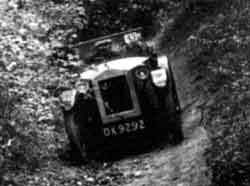
Type 1 - Trials Special (1948)
The first Lotus based on a 1930 Austin 7 saloon. Chapman ensured that every body panel was stressed such that it would add to overall strength of the car without adding unnecessary weight. This was an engineering philosophy which was to carry on for the rest of Lotus history 
Type 7 - Lotus Seven (1957 - 1972)
The Lotus Seven began as an uprated version of the successful Lotus Mark 6 (which was the first production sports car for Lotus). Steel tube frame with aluminium bodywork, later with glass-fibre nose and fenders. A variety of engines were used. Produced mainly in kit form, it enables many enthusiasts to own a dual-purpose road/racing sports car at a reasonable price. Four basic variants are produced by Lotus until 1973, when the rights to manufacture were taken by Caterham Cars Ltd., which still produces the Caterham Seven (a development of the Lotus Seven Series 3).

7/29/2010

Lincoln History

  • Current Lincoln Models
  • All Lincoln Models
Lincoln is an automaker with a long history of building upscale vehicles for the American market. A division of Ford, Lincoln differentiates its vehicles through additional luxury features, more powerful engines and unique styling. The automaker's lineup includes cars, pickups and SUVs.

The company was established in 1917 by Henry Leland, an automotive parts manufacturer who had previously founded the Cadillac brand. He named the company after his boyhood hero: the 16th U.S. president, Abraham Lincoln. Early Lincoln models include the L Series and the K Series. The company quickly hit dire straits, however, and was bought by Ford Motor Company in 1922.

Volvo History

History of the Volvo Car

Volvo, Latin for "I roll", was born on April 14th, 1927 when the first car "Jakob" left the factory in Gothenburg, Sweden.
Founded by Assar Gabrielsson and Gustaf Larsson, the company was formed on a background of quality and safety which were both of paramount importance, a concept that still applies to the Volvo cars of today.
The fledgling company produced both closed top and cabriolet models of their new four-cylinder OV4 and PV4 models, which were constructed to better withstand the harsh Swedish climate, than contemporary US imports. Both carried the Swedish symbol for iron attached to a diagonal piece if metal on the front grille – another aspect of Volvo’s heritage that can still be seen on today’s models.
In 1929 a six-cylinder PV651 model had been introduced which was both longer and wider than the Jakob. Its success helped the company to purchase its engine supplier and buy its first factory and by the end of 1931 return it’s first dividend to shareholders.

Twitter Delicious Facebook Digg Stumbleupon Favorites More

 
Design by Free WordPress Themes | Bloggerized by Lasantha - Premium Blogger Themes | Powerade Coupons